



Why did the Vietnamese women's national team fail in the 2026 Asian Cup?



The heavy 0-4 loss to Japan marked the end of the Vietnamese women's football team's campaign at the 2026 Asian Cup Finals. This outcome not only led coach Mai Đức Chung's squad to exit early in the group stage but also definitively dashed their hopes of qualifying for the 2027 Women's World Cup.
The heavy defeat against Japan was not unexpected. Warning signs had emerged earlier when the Vietnamese women's team started the 2026 Asian Cup Finals with a narrow 2-1 victory over India and followed it with a 0-1 loss to Chinese Taipei.
The key reasons for these disappointing results lie in the fitness and age of many core players. This issue became even more severe as they had to compete under nearly 40-degree Celsius hot weather conditions in Australia.
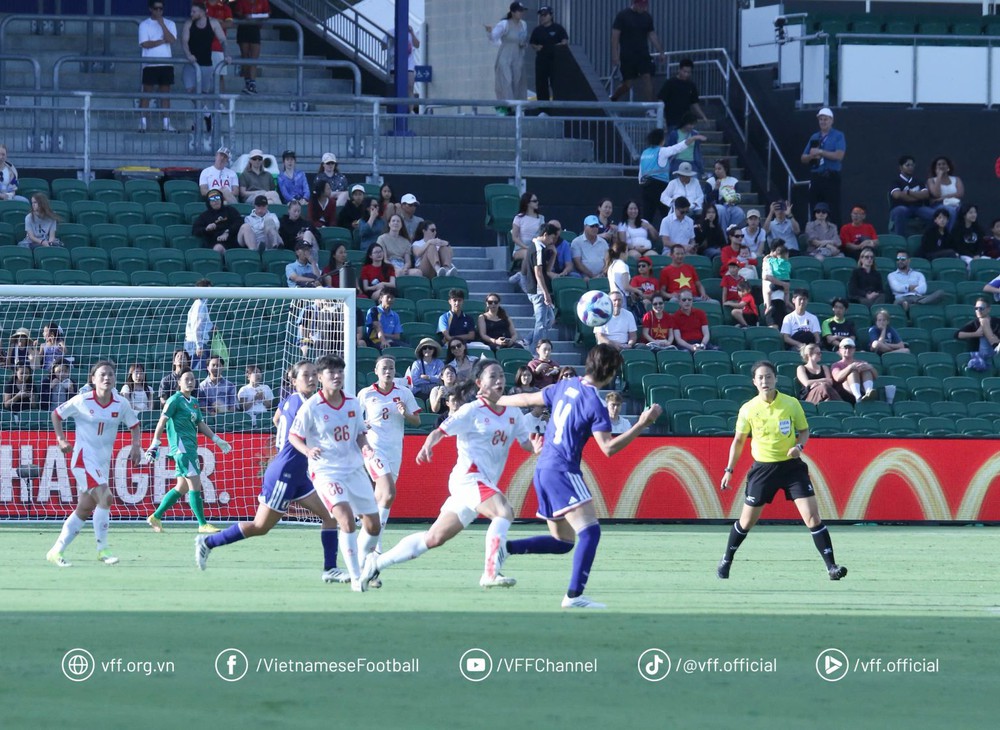
The heavy 0-4 defeat against Japan concluded the journey of the Vietnamese women's football team at the 2026 Asian Cup Finals. Photo: VFF
High age and playing under hot conditions caused the Vietnamese women's players to lose stamina quickly. When their "battery" drained rapidly, they could no longer maintain a high playing tempo, sustain passing quality, execute breakthrough runs or good finishing. They also couldn't cover spaces effectively in defense.
The loss to Chinese Taipei is a typical example of the age issue and fitness weakness of the Vietnamese women's team. In that match, Vietnamese players clearly showed signs of declining stamina as they played during midday hours under harsh weather conditions.
After the match, coach Mai Đức Chung frankly admitted that fitness issues significantly affected the team's performance. Notably, Chinese Taipei also played under similar conditions, but they appeared more energetic than us.
The underlying cause of this difference lies in the average age of the players. According to statistics, the Vietnamese women's team has an average age of 27.8 years, the highest at this year's Asian Cup Finals. Many key players are over 30, causing their performance to seriously decline when facing younger and more physically robust opponents.
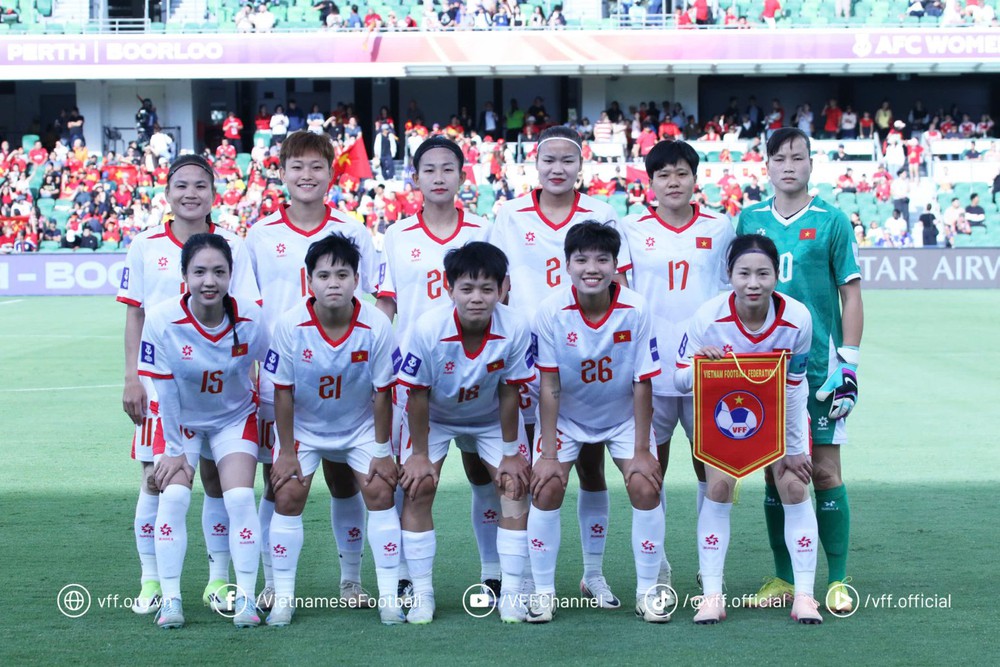
The Vietnamese women's team has many older players, leading to diminished performance due to insufficient fitness. Photo: VFF
On the forward line, Huỳnh Như is 34 years old and past her peak. Hải Yến (31 years old) also cannot maintain her previous good form due to age reasons.
In the midfield, players like Thái Thị Thảo (31 years old), Bích Thùy (32 years old), and Dương Thị Vân (31 years old) are all important figures. But age makes it difficult for them to sustain high-intensity play throughout the match.
The age problem also appears in the defensive line. Goalkepers Trần Thị Kim Thanh and Khổng Thị Hằng are both 32 years old. They have experience and talent but cannot always maintain the endurance and quick reflexes they once had.
Rich playing experience is an advantage that helped the Vietnamese women's team dominate Southeast Asia for many years, with four consecutive SEA Games gold medals, most recently at SEA Games 2023. However, when stepping onto the continental stage and facing opponents with superior physical foundations, the signs of aging among the core players become evident.
Even at SEA Games 33, the Vietnamese women's team experienced a very difficult final against Philippines. After a 0-0 draw over 120 minutes, the Vietnamese team lost on penalty kicks.
Although part of the failure stemmed from a controversial situation where Vietnam was denied a valid goal by the referee, signs of decline and reduced competitiveness when facing younger and stronger opponents were apparent.
Another worrying point is that while the current generation of players is mostly older and past their peak due to declining fitness, we still lack a truly reliable next generation.
Vietnamese women's football is facing a generational gap issue. After the golden generation of Huỳnh Như and her teammates, hope is placed on relatively young players like Thanh Nhã (24 years old) or Ngân Thị Vạn Sự (24 years old). However, both have not truly risen to become core players ready to shoulder responsibilities in the national team.
Other relatively young players like Trần Thị Duyên (25), Hải Linh (24), or Vũ Thị Hoa (22)… also do not ignite hope for the future.
The early farewell to the 2026 Asian Cup reflects the difficult problem Vietnamese women's football is facing. Past successes were built by a talented generation, but to maintain its position in the future, rejuvenating the squad and building a quality next generation has become a more urgent task than ever.
If we cannot find a solution to the aforementioned problem, the gap between Vietnamese women's football and its regional and continental opponents may continue to widen.



 Links
Links
 Contact
Address:123
Number:+123
E-mali:i123@gmail.com
 App
App